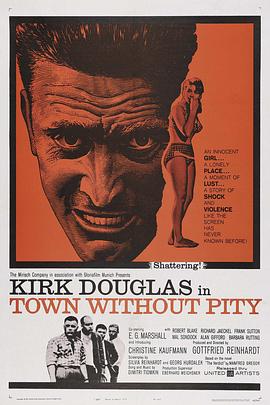
In 1960 Germany, Army lawyer Major Steve Garrett is assigned to defend four American soldiers charged with raping 16 year-old Karin Steinhof. She was swimming in a nearby river when the four of them came across her and they were soon arrested thereafter. Maj. Garrett is anything but impressed with his clients but his job is to give them the best defense possible. He tries to obtain a plea bargain but Karin's father flatly refuses and the prosecutor, Colonel Jerome Pakenham, is seeking the death penalty. In order for the death penalty to be applied, the defense attorney must have the opportunity to thoroughly examine the victim under oath. He sympathizes with Karin and does his best to convince Karin father to keep her from testifying. When he refuses, Garrett is left will little choice but to attack her on the stand. Written by garykmcd
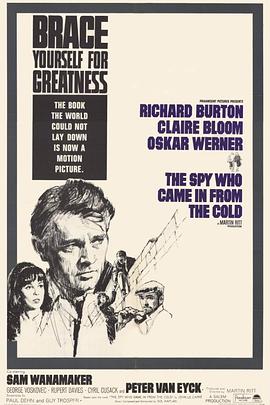
1960年代冷战期间,英国间谍阿列克·利马斯(理查德·伯顿 Richard Burton 饰)长年驻守在西柏林从事间谍业务。然而在目睹了潜伏在东德的同事被东德边防军射杀后,阿列克回到了英国秘密情报局总部,接受机密的终极任务。为了混入东德,阿列克故意暴露出自己的弱点,甚至是堕落的一面,以便离间东德情报机构的头目穆恩特(彼得·范·埃克 Peter van Eyck 饰)与手下菲德勒(奥斯卡·威内尔 Oskar Werner 饰)的关系,瓦解其势力。然而在扑朔迷离的双面间谍面具下,阿列克渐渐发现自己不过是一枚微不足道的棋子,内心的道德审判和日渐模糊的善恶之分也让阿列克备受折磨。
本片改编自1963年出版的同名谍报小说。本片共获奖6次,提名4次,男主角理查德·伯顿更凭借此片荣获1966年第38届奥斯卡金像奖最佳男主角提名。
From co-writer and producer Colin Minihan, director of past FrightFest favourites WHAT KEEPS YOU ALIVE and IT STAINS THE SANDS RED, and director Kurtis David Harder, of INCONTROL fame, comes a snappy, smart and scary chiller in the GET OUT tradition. A same-sex couple move to a small town so they can enjoy a better quality of life and raise their 16 year-old daughter with the b...
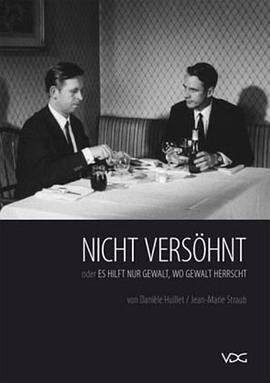
The subtitle of Jean-Marie Straub and Danièle Huillet’s first feature, from 1965, “Only Violence Helps Where Violence Reigns,” suggests the fierce political program evoked by their rigorous aesthetic. The pretext of the film, set in Cologne, is Heinrich Böll’s novel “Billiards at Half Past Nine,” which they strip down to a handful of stark events and film with a confrontational angularity akin to Bartók’s music that adorns the soundtrack. The subtlest of cues accompany the story’s complex flashbacks. The middle-aged Robert Fähmel tells a young hotel bellhop of persecutions under the Third Reich; his elderly father, Heinrich, an architect famed for a local abbey, recalls the militarism of the First World War, when his wife, Johanna, incurred trouble for insulting the Kaiser. A third-generation Fähmel is considering architecture, just as the exiled brother of Robert’s late wife, returns, only to be met by their former torturer, now a West German official taking part in a celebratory parade of war veterans. Straub and Huillet make the layers of history live in the present tense, which they judge severely. The tamped-down acting and the spare, tense visual rhetoric suggest a state of moral crisis as well as the response—as much in style as in substance—that it demands.