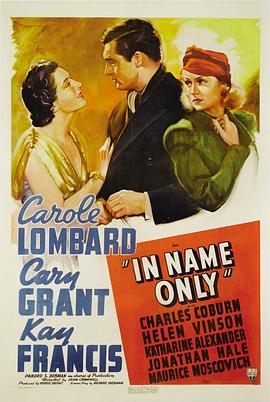
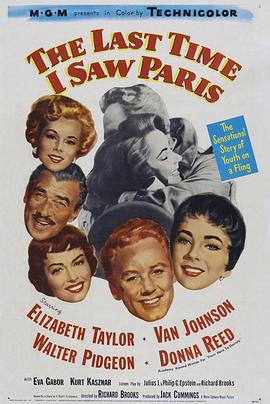
While out riding in the country, wealthy New Yorker Alec Walker meets young widow Julie Eden, and a relationship quickly develops. However, Alec has not told her that he is already locked into a loveless marriage to the avaricious Maida, who has contrived to convince his parents she is the ideal wife. A completely coincidental car crash alerts the two women to each other's existence, a situation to which they react very differently.
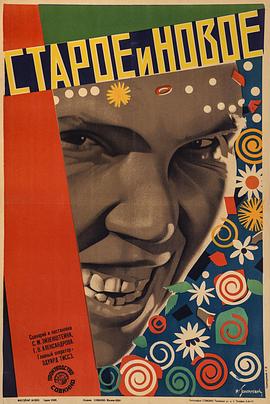
Due to some common interests between German and Russian aristocracy ( the Russians even had aristocrats in their past not to mention they had an Empress called Catherine the Great, as great as this German count's heiresses… ), it is not strange that this Teutonic count has understood and even enjoyed Herr S. M. Eisenstein's "Staroye I Novoye".
It is not very usual that for the aristocracy to enjoy Bolshevist films full of proletarian demands that put private property at risk or as it happens in this case, a film about the Communist Party's policy on the subject of the collectivization of the Soviet agriculture. Normally this would be perfect gibberish for this German count, but thanks to Herr Eisenstein 's greatness and directorial talent, the hardships of the heroine of the film, Dame Marfa ( Dame Marfa Lapkina ) breached even the thick aristocratic Schloss walls.
And that's one of the first remarkable aspects of this oeuvre; in spite of the political subject of the film, the powerful images and lyricism ( astonishing and beautiful shot compositions ), especially during the first part of the movie, preserve the artistic merits entirely while serving a propaganda purpose. The second remarkable aspect of the film is the dichotomy between the old and new, the fight to improve the lot of Dame Marfa and her countrymen. There are many discussions because it is not easy even in Russia to change ancient and conservative customs. There are superb metaphors and social criticism ( illiteracy, bureaucracy, religiosity ) which perfectly fit the film, and last but not least, "Staroye I Novoye", is a kind of archaic documentary about ancient customs established deeply in old Russia, those ones that our heroine must fight against. And there is also a lot about agriculture ( very enlightening for this German count), especially about harvesting and how to fatten Russian cows or pigs ( literally, no pun here… ).
Herr Eisenstein had to bear during the last era of his film career, unbelievable censorship and mutilation of his work, as happens with "Staroye I Novoye". The film was reedited and Eisenstein accused of sympathizing with Trostky's policies but fortunately the film was restored and showed by the German-frenchified t.v. channel "ARTE", natürlich!, including an evocative music score by Herr Taras Bujewski, that fits superbly Herr Eisenstein primal artistic interests.
And now, if you'll allow me, I must temporarily take my leave because this German Count must buy a tractor for one of his Teutonic heiress.
故事发生在第二次世界大战刚刚结束之后,一切都是百废待兴的样子。士兵查尔斯(范·强生 Van Johnson 饰)在完成了自己身为一名军人的使命之后,决定留在巴黎,进军文艺界,成为一名作家。在巴黎,查尔斯邂逅了海伦(伊丽莎白·泰勒 Elizabeth Taylor 饰)和玛丽安(唐娜·里德 Donna Reed 饰)姐妹两,很快,查尔斯便和海伦坠入了爱河,两人结为夫妻,并且有了他们爱情的结晶。
虽然感情生活一帆风顺,但查尔斯的事业却一直没有起色,迟迟无法获得成功的他心灰意冷,开始依靠酒精派遣内心的郁闷。某天,酩酊大醉的查尔斯将海伦锁在了门外,海伦因此患上肺炎不幸去世,玛丽安则带走了两人的孩子,查尔斯失去了一切。