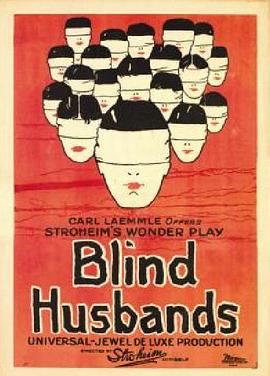
Two differences between this Austrian version and the generally available American version are immediately obvious: they differ both in their length and in the language of the intertitles. The American version is only 1,883 metres long - at 18 frames per second a difference of some 7 minutes to the Austrian version with 2,045 metres. Whereas we originally presumed only a negligible difference, resulting from the varying length of the intertitles, a direct comparison has nevertheless shown that the Austrian version differs from the American version both in the montage and in the duration of individual scenes. Yet how could it happen that the later regional distribution of a canonical US silent film was longer than the "original version"?
The prevalent American version of Blind Husbands does not correspond to the version shown at the premiere of 1919. This little-known fact was already published by Richard Koszarski in 1983. The film was re-released by Universal Pictures in 1924, in a version that was 1,365 feet (416 metres) shorter. At 18 frames per second, this amounts to a time difference of 20 minutes! "Titles were altered, snippets of action removed and at least one major scene taken out entirely, where von Steuben and Margaret visit a small local chapel." (Koszarski)
From the present state of research we can assume that all the known American copies of the film derive from this shortened re-release version, a copy of which Universal donated to the Museum of Modern Art in 1941. According to Koszarski the original negative of the film was destroyed sometime between 1956 and 1961 and has therefore been irretrievably lost. This information casts an interesting light on the Austrian version, which can be dated to the period between the summer of 1921 and the winter of 1922. Furthermore, the copy is some 200 metres longer than the US version of 1924. If one follows the details given by Richard Koszarski and Arthur Lennig, this means that, as far as both its date and its length are concerned, the Austrian version lies almost exactly in the middle between the (lost) version shown at the premiere and the re-released one.A large part of the additional length of the film can be traced to cuts that were made to the 1924 version in almost every shot. Koszarski describes how the beginning and the end of scenes were trimmed, in order to "speed up" the film. However, more exciting was the discovery that the Austrian version contains shots that are missing in the American one - shots/countershots, intertitles - and furthermore shows differences in its montage (i.e. the placing of the individual shots within a sequence). All this indicates that Die Rache der Berge constitutes the oldest and most completely preserved material of the film.
2018年全美音乐奖颁奖典礼在洛杉矶举行。带来开场表演的“霉霉”泰勒·斯威夫特不仅凭借《Reputation》获得全美音乐奖最佳流行/摇滚专辑以及年度巡演大奖,更最终捧回年度艺人大奖。“卡妹”卡米拉·卡贝洛也首次斩获两座AMA奖杯——她不仅拿下年度新人,还凭借大热单曲《Havana (feat. Young Thug)》获得最受欢迎流行/摇滚歌曲;“萌德”肖恩·蒙德兹则获得成人抒情最受欢迎艺人等。
玛丽亚·凯莉一袭玫粉裙抒情表演了新单曲《With You》,发挥稳定;最受欢迎说唱艺人卡迪·B联手Bad Bunny和J Balvin首演新单《I Like It》;萌德也联手Zedd首演混音新单《Lost in Japan》。除此之外,美国独立摇滚乐团Panic! At The Disco也在颁奖礼上登台,翻唱那首著名的摇滚金曲《波西米亚狂想曲》,向皇后...
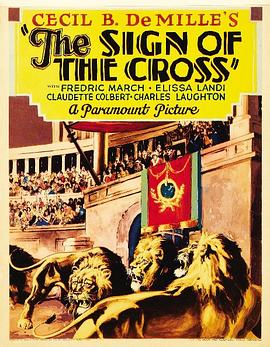
把罗马焚城后,惨无人道的暴君尼禄(查尔斯·劳顿 Charles Laughton 饰)将矛头指向基督徒,开始大规模肆意捕杀基督徒。不仅如此,尼禄更颁布了法令把抓获的基督徒送往竞技场。罗马最高军事军官马库斯(弗雷德里克·马奇 Fredric March 饰)奉命残杀这些捕获的基督徒。被抓的基督徒中有两名老者准备逃跑,马库斯本欲逮捕他们,然而当马库斯看到他们的继女麦西卡(爱丽莎·兰迪 Elissa Landi 饰)时,情不自禁地一见倾心。楚楚动人的麦西卡,马库斯很快与她坠入爱河不能自拔,随之下令释放了所有基督徒。马库斯的这一举动,不仅激怒了暴君尼禄,更让一直暗恋他的皇后帕亚(克劳黛·考尔白 Claudette Colbert 饰)醋意大发,心生嫉妒。
In 1943, revolutionary inventor Nikola Tesla died penniless in the New Yorker Hotel. Within 24 hours the U.S. government seized everything in his room. But one design was already missing. Seventy years later in Buffalo, NY, a brilliant young engineer has found it. And the only person she can trust is a low-rent detective with a pack-a-day habit.